The socialisation window is one of the most important and most misunderstood phases of a puppy's life. Between roughly three and fourteen weeks of age, the brain is actively building its map of the world — filing away what's safe, what's unfamiliar, and how to respond to both. What happens during this window shapes behaviour for years.
Treats play a bigger role in that process than many owners expect. Not just as a reward, but as a tool for changing how a puppy feels — turning something uncertain into something associated with good things, and building the kind of confidence that follows a dog into adulthood.
Choosing the Right Treat for Socialisation
Not all treats are equal for this kind of work. What you're looking for in a socialisation treat is different from what you'd want for a long afternoon chew.
High value. The treat needs to be interesting enough to hold attention in a distracting environment. Dry biscuits usually don't cut it outdoors. Something with a strong natural scent — meat-based, soft, and aromatic — works much better.
Small and fast. Socialisation relies on repetition and timing. A treat that takes thirty seconds to eat breaks the rhythm. You want something that can be delivered, consumed, and followed up in seconds.
Easy to handle. Fumbling for treats while your puppy is working up the courage to approach something new is counterproductive. Soft treats that can be broken up and held in a pouch or pocket keep the experience fluid.
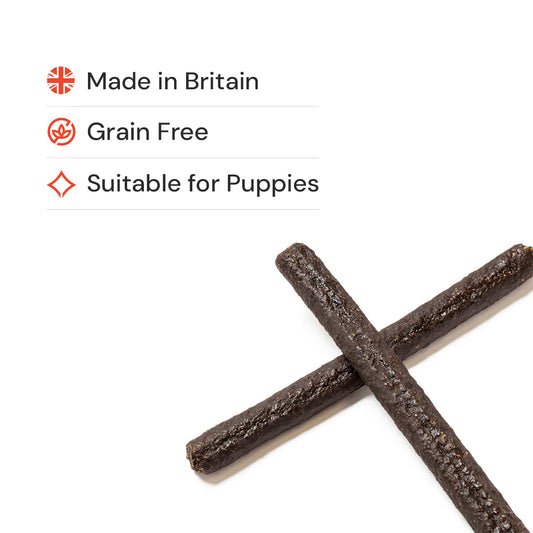
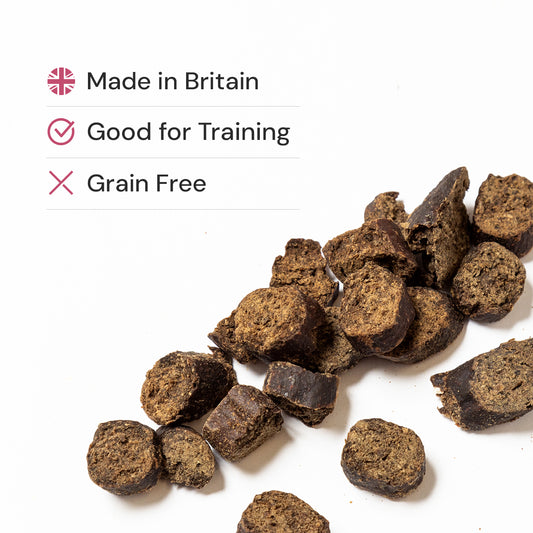
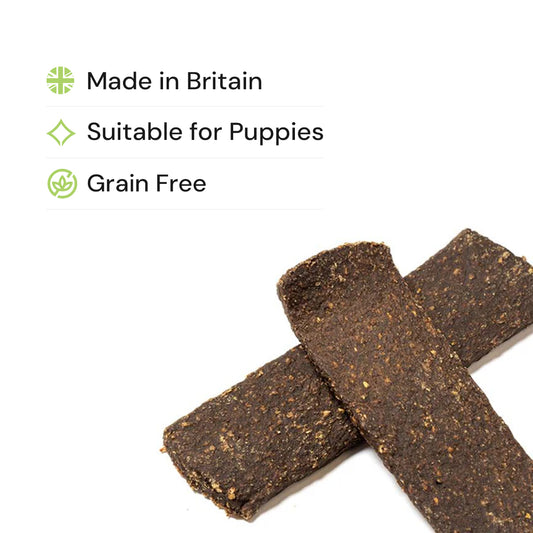
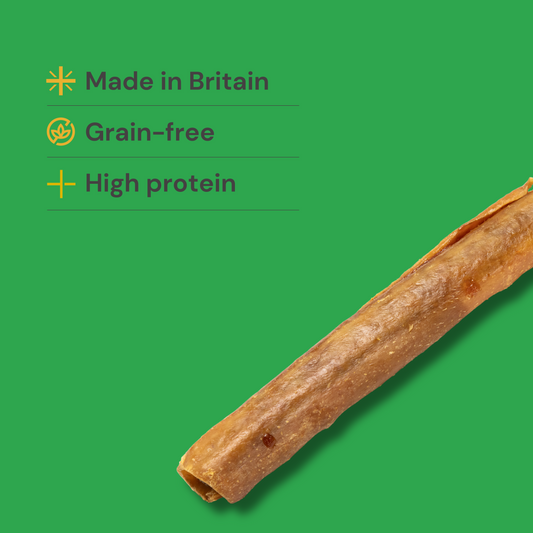
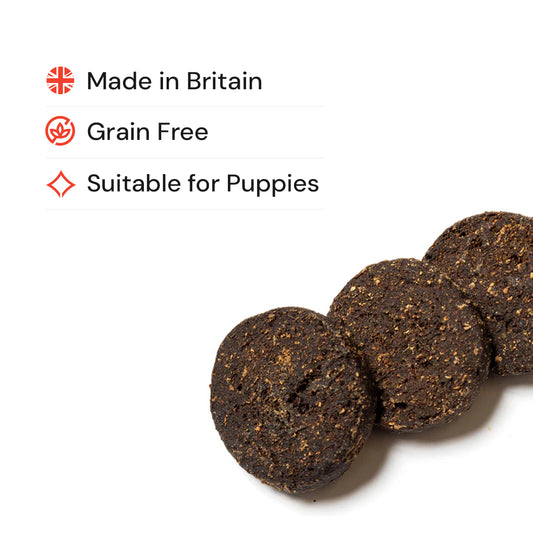
Gourmet Slices fit this brief well — soft, strongly scented, easy to break into tiny pieces, and available across a range of proteins including venison, duck, and chicken. For puppies with sensitive stomachs or owners already feeding a raw diet, Gourmet Pure Sticks offer a single-ingredient alternative with the same practicality.

Meeting New People
One of the most important things a puppy can learn is that strangers are safe — and ideally, that strangers predict good things.
The instinct many owners have is to let people approach and pet the puppy freely, hoping the exposure itself is enough. But an unsolicited approach, however friendly, can actually be stressful for a young dog — particularly one that hasn't yet built confidence around new faces.
A better approach is to ask the person to offer a treat rather than immediately reaching to pet them. This gives the puppy agency — it can approach on its own terms, associate the person with something positive, and build confidence rather than simply endure the interaction.
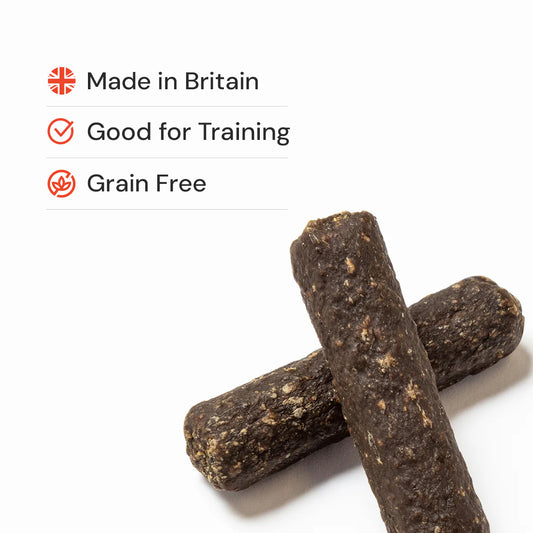
Gourmet Sausages work particularly well here because the strong scent does some of the work — a puppy that's uncertain will often follow its nose toward something interesting before it's ready to move toward a person. Keep a few in your pocket on every walk during the early weeks.

New Environments and Surfaces
Puppies encounter an astonishing variety of surfaces in their early weeks — grass, gravel, wooden floors, metal gratings, wet pavements, carpet. Each one is new information, and some will be met with hesitation.
The principle is the same: don't push, don't pull, but do reward. Place a treat on or near the new surface and let the puppy choose to approach. Repeat. What you're building is an association between uncertainty and good outcomes — the foundation of a confident dog.
Gourmet Meaty Strips are useful here because they can be torn into very small pieces and placed precisely where you want the puppy's attention — on the edge of a new surface, at the bottom of a step, on the threshold of a new room. The variety of proteins available also means you can rotate flavours to keep motivation high.

Sounds and Sudden Stimuli
Traffic noise, children, other dogs barking, the sound of a bin lorry — city life is loud, and many dogs develop sound sensitivities that trace directly back to early experiences, or the absence of them.
Counterconditioning is the tool here: the moment a novel or potentially startling sound occurs, a high-value treat appears. The goal is to build an automatic association — loud thing happens, good thing follows — before the puppy has time to form a fearful response.
Timing matters enormously. The treat needs to come within a second or two of the sound, not after the puppy has already reacted. Gourmet Sticks are ideal for this — long enough to be grabbed quickly, easy to break mid-stick, and high-value enough to reliably interrupt attention.
Settling in New Places
Long-lasting natural chews help here in a way that training treats can't. They occupy the puppy, support the chewing instinct already in full swing during early puppyhood, and — crucially — chewing itself has a calming physiological effect. Research on the neuroscience of chewing shows it activates the parasympathetic nervous system, helping to reduce cortisol and bring the body back to a calmer baseline.
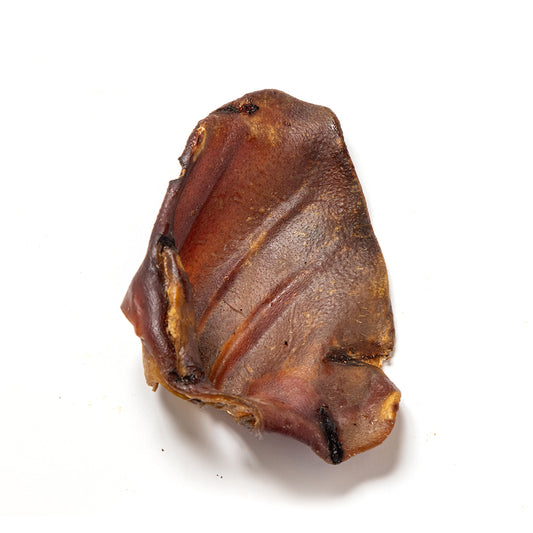
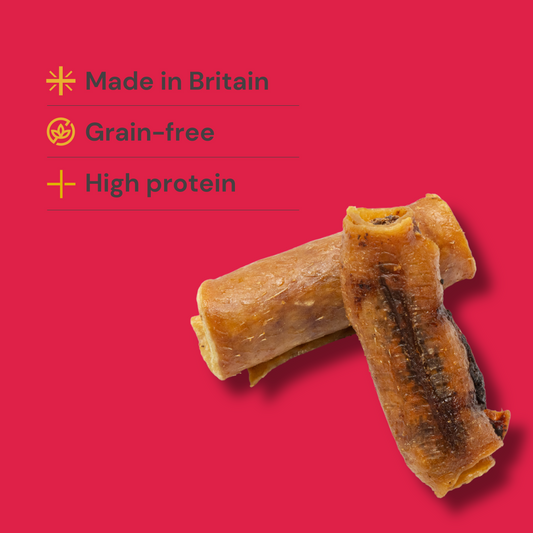
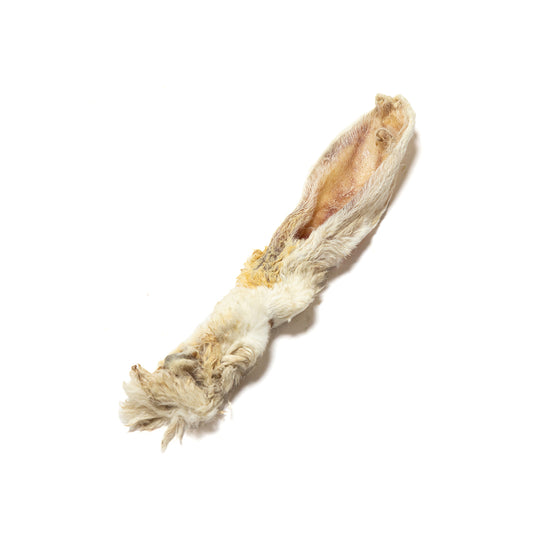
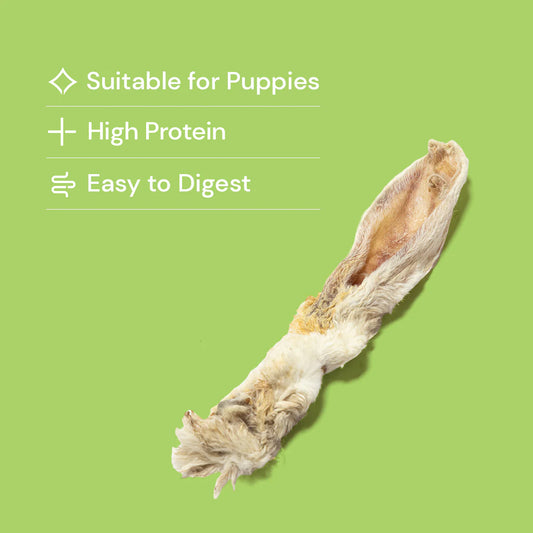
Hairy Rabbit Ears are a natural first choice for puppies — light, digestible, and gentle enough for younger teeth. The fur provides a natural source of fibre, supporting gut health at a time when the digestive system is still finding its feet. Puffed Jerky — air-dried beef lung — rounds out the options for puppies that need something even lighter in texture: airy, easy to chew, and high in protein without being dense or hard.
For something a little different, Bone Broth poured over a lick mat is an increasingly popular way to create a calm, focused activity in a new environment — the licking action itself is deeply soothing for puppies, and bone broth provides natural collagen and amino acids to support joint and gut development at the same time.
Building a Reliable Recall
A reliable recall doesn't just happen — it's built, repetition by repetition, in the weeks when the puppy still finds the world manageable. Leave it too long, and you're competing with far more interesting distractions.
Recall training depends on making coming back to you the most rewarding thing that can happen. That means using something genuinely exceptional — not a standard training treat, but something that creates an unmistakable signal: this is worth it.
Dried Sprats are a standout option for recall work. The strong natural fish scent carries across distance in a way softer treats don't, making them effective even in open environments. They're also rich in omega-3 fatty acids, which support brain development in puppies — a useful bonus during a period when the neurological foundations for learning are still being laid.
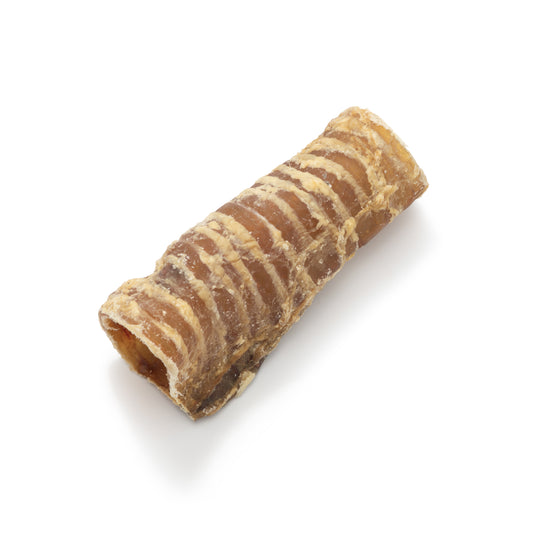
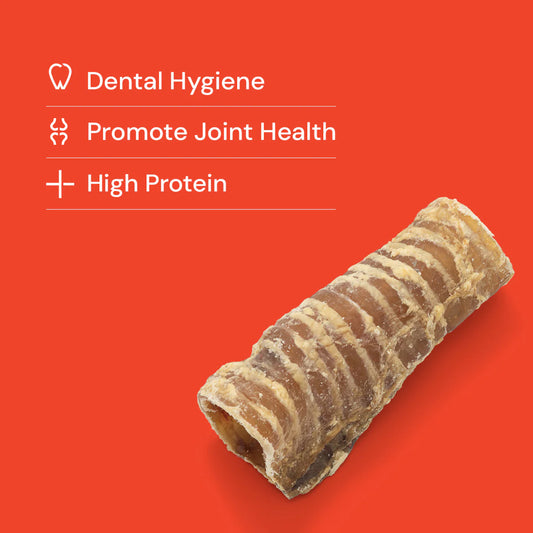
Tripe is another strong contender for high-distraction recall. It's not the most glamorous treat to carry, but few things cut through outdoor distractions more reliably than the scent of natural green tripe.

FAQs: Puppy Socialisation and Treats
At what age should I start socialising my puppy? The primary socialisation window runs from roughly three to fourteen weeks. Most puppies arrive in their new home at eight weeks, which means you have around six weeks of prime opportunity — start as soon as they arrive.
How many treats can I give during a training session? Keep individual treats very small — pea-sized — so you can reward frequently without overfeeding. A single training session might involve twenty to thirty rewards without meaningfully affecting the puppy's daily intake, provided portions are appropriately small.
My puppy isn't food motivated. What should I do? Try working before meals rather than after, and experiment with higher-value options. Most puppies that seem uninterested in treats are either full, over-threshold, or simply haven't encountered a treat interesting enough. Dried Sprats or Tripe tend to get results where other treats don't.
Are natural chews safe for puppies? Yes, provided they're appropriate for the puppy's size and age. Softer options like Hairy Rabbit Ears and Chicken Feet are well suited to younger puppies. Always check the suitable for puppies collection before introducing anything new.
Can I use treats to help with separation anxiety? Treats alone won't solve separation anxiety, but they can support a gradual desensitisation process. A long-lasting chew or a lick mat with Bone Broth given immediately before you leave can begin to build a positive association with your departure — provided you work up gradually and don't leave the puppy for long periods before they're ready.
How do I stop my puppy begging at the table? The simplest solution is a chew or lick mat activity given in a designated spot at mealtimes. A puppy that has its own thing to work on is far less likely to focus on yours. Consistency matters more than the specific treat — whatever you give, give it in the same place each time.